Blog

  • Wardrobe & drawers removal

    Wardrobe & drawers removal

    Even furniture made of wood or metal can often be recycled after its useful life ends. Most furniture can also be recycled at your nearest civic amenity. Some authorities may also provide bulky goods collection services, which are usually charged a fee.

    The task of getting rid of drawers or wardrobes can be challenging. These items can be very difficult to dispose of because they are often heavy, bulky, and sometimes dangerous to lift. It’s not difficult to find help. Our man & Van teams will help you remove bulky furniture quickly, easily, and at a convenient time for you.

    We can help you to get rid of your unwanted furniture or rent a skip. We offer a quick, friendly, and reliable service that you can trust, no matter how large or small your furniture collection is. We offer both residential and commercial services, helping customers to save time and money while freeing up valuable space. These items are usually heavy, large and cumbersome. They can also be difficult to dispose without professional help. We have the solution and would love to talk to you about wardrobe and drawers disposal.

    Rubbish removal Dublin 7
    Dublin 7 is North West of Dublin city centre.

    Why should you choose a man-and-van team for furniture removal?

    Each of our waste carriers has been licensed and insured to handle all types of waste disposal throughout Dublin. Our vehicles and personnel are equipped to load and unload your furniture quickly and efficiently. A quick call to one the Dublin teams will get you a collection date at your convenience.

    Our service has saved many customers from stress and save them hours. We have waste carriers in England, Wales Scotland and Ireland who are registered with Environment Agency. This allows you to rest assured that all your items will be disposed off in the most eco-friendly manner. We will always seek to recycle, reuse, and refurbish as much as possible.

    Reclaiming valuable space in your home is easy

    Our wardrobes, drawers, and other recycling service allows you to quickly and easily get rid of your old furniture. Our service is a great option to skip rental and allows for the quick disposal of old furniture. A skip will, however, generally cost more. It will take up your driveway. You will also need to arrange for a permit to keep it off the road. It is hard to beat our fast and professional pick-up services.

    It doesn’t matter if you’re on your tablet, phone, or computer, you can order furniture collection at the click of a button. We have everything you need: sliding door wardrobes, wooden chests of draws, and children’s wardrobes.

    You can get furniture removal services whenever you want

    Our teams will be there to remove your rubbish. However, we can do much more than just drawers and wardrobes. Our services range from house clearances to single-off rubbish collections.

    Need to get rid of household rubbish in Dublin?

    Look no further than Rubbish Taxi! We understand that price matters, and we’re sure you’ll find our rubbish removal service in Dublin affordable.

    Here’s why you should choose us:

    • Competitive rates: We won’t break the bank!
    • Reliable and professional: Our insured teams will get the job done right.
    • Convenient service: We can remove your junk from anywhere in your home or anywhere else in Dublin.
    • Flexible scheduling: Need it gone today? No problem! We offer same-day service and even work weekends and off-hours.

    When cleaning household rubbish, it’s essential to ensure that your property remains in good condition.

    However, if you encounter any issues with property purchases or disputes during this process, Wellingtons Solicitors can provide expert assistance. Whether you’re buying or selling a property, their team ensures a smooth transaction process. For property disputes, their team offers effective resolution services to address issues such as boundary disputes or leasehold disagreements. Contact Wellingtons Solicitors today to discuss how their team can help with your property needs.

  • How to recycle your kitchen cabinets

    Congratulations! Now you are ready to remodel your outdated kitchen. It is recommended to update your kitchen at the least once every 10-15 years. Otherwise, you could end up with hundreds of kilos more rubbish.

    It is important to think about how you will reuse and recycle as many fixtures and other features as possible before you go too far.

    You may want to take out the cabinets from your kitchen. Kitchen cabinets are an expensive item so it’s possible to sell them.

    You might also find it interesting that charities accept building materials. It may be possible to recycle your kitchen cabinets, depending on their condition. For more information, please read on.

    What are kitchen cabinets made from?

    Kitchen cabinets can be made from wood. What kind of wood? It is possible to recycle untreated wood (wood that doesn’t have any stain, varnish or paint). It can be used to make compost or mulch by being chipped. It can also be used to make chipboard lumber and particleboard.

    Although it is not exactly recycling wood, many places use it for fuel. Wood from your kitchen cabinets cannot be recycled if it has been treated, which is likely. Recycled wood is used to make mulch or compost, so it is vital that no hazardous chemicals get into the material.

    Treated wood should not also be burned as the chemicals contained in it can be released into the atmosphere. Kitchen cabinets made out of chipboard, particleboard or another composite material shouldn’t be recycled. These products are made from old wood chips and glue.

    It is often toxic and contains formaldehyde. This makes it unsafe to recycle. The first thing you should do when considering your options for disposing your kitchen cabinets is to identify what kind of wood they are made of. Then you can decide if your kitchen cabinet can be reused or thrown away.

    How do I choose the best way of disposing of my cabinets?

    There are many choices available. However, the best option for your needs will be determined by two factors.

    What shape are your cabinets made in?

    • Someone may be interested in them if they can be sanded, painted, or repaired.

    You can even reuse them as crafts!

    • Ask the organization if they are willing to take your old cabinets. They may also ask for a photo before scheduling a pick up.
    • You can post an advertisement on Facebook Marketplace for FREE if the items are not in good condition.
    • Your cabinets may not be wanted by anyone or in very poor condition.

    Do you have enough space for them to be stored?

    • If you don’t have storage space or live in a place where you can’t store your items outside, plan ahead to arrange for a donation pickup or delivery.
    • If you have a garage or basement, store them until pickup.
    • You can tarp your cabinets outdoors if there is enough space.

    How to Recycle Kitchen Cabinets

    If you have kitchen cabinets that are made of untreated lumber, and want to ensure they get recycled properly, you can drop them off at the local recycling center.

    Remove any paper coverings on the cabinets or similar materials and dispose of them before placing the wood in the recycle bin. Check local websites for wood recycling facilities. They will not accept branches or other yard trimmings.

    There are many cities that only list “wood recycling program” on their website. They may not be interested in other types of “green waste.” Sometimes commercial companies have access that homeowners may not have to the recycling resources.

    Take a note: Make sure your new kitchen cabinets are made from untreated wood. This will make it easy to reuse them later. Make sure that your cabinets are durable and of high quality so that you don’t have to replace them for a long time.

  • Here are some guidelines to help you decide what you should or shouldn’t throw in your recycling bin.

    Here are some guidelines to help you decide what you should or shouldn’t throw in your recycling bin.

    Any plastic packaging, even soft plastic, can be disposed off in your household recycle bin once it has been ‘clean and dry’.

    It is a significant shift, since rigid plastic used to be allowed in your green trash can.

    It occurs in the wake technology upgrades at recycling centers in Ireland.

    These centres will seperate any plastics that cannot be recycled and make Solid Recovered Fuel. This can be used to replace fossil-fuelled cement kilns.

    Here are some guidelines to help you decide what to put in your recycling container.

    What can you put in the household recycle bin

    • Soft plastics: All types of plastic packaging including bubble wrap, bread wrappers breakfast cereal bags, frozen food bag, 6 pack rings and carrier bags
    • Rigid plastics – e.g. bottles, trays, yoghurt pots, biscuit trays, takeaway containers
    • You can still use pizza boxes, but you should dispose of any leftovers or crusts in the food waste container
    • Crisp packets are not recyclable if they become soiled. But, you can put them in the recycle bin and get them sent as solid recovered fuel.
    • Paper
    • Card
    • Tins
    • Cans
    • Cartons

    What you cannot put in your recycling bin

    • Food waste – food waste should be placed in your food waste/compost bin, if you have one
    • Empty aerosol bottles – bring them to a local civic site or, if that’s impossible, place them in the general waste container
    • You should bring your batteries/brights to a drop-off location.
    • Glass – take it to the local bottle bank
    • Garden waste can be thrown in the food waste container
    • Clothes – Should be taken to a clothes bank, charity shop, or textile recycling centre
    • Pringles Tubes – Should be put in general trash, but put the lid in your recycling bin
    • Useful wipes and nappies
    • Electrical items
    • Kitchen cloths
    • Useful paper towels
    • Used matches
    • Plasters

    All types and sizes of rubbish collection in Dublin County

    Our company supports commercial waste recycling and rubbish collection through their two-man truck teams. This company offers a high-quality, alternative skip hire service in Dublin. Large and small companies in Dublin County can have their rubbish removed and collected.

    Here is a complete list of rubbish removal companies from Rubbish Taxi.

    Office rubbish removal

    We’re experts in office clearance. We can take away all of your office waste, including IT equipment.

    Household rubbish disposal

    Let us handle your house clearance needs. We can remove all household waste and rubbish in Dublin. We can take away large items such as furniture and mattresses that are too heavy to fit into a car. We can often dispose of items that are longer than 8ft (2.5m), and we can often break down larger items.

    Domestic Waste Clearance

    We are here to assist you if your need is for a residential trash collection business that offers excellent customer service. Our bed and mattress disposal rates in Dublin County are very competitive. The cost to dispose of certain items can be higher than others, depending on the recycling method used.

    Commercial waste management

    We can provide reliable services for all your waste disposal needs. We can dispose of rubbish in commercial buildings.

    Construction waste clearance

    Our waste removal services in Dublin can help you dispose of builders waste, regardless of how large your construction site may be.

    Garden Clearance

    We remove all types garden waste: Trampoline, Tree Stumps, Trampoline and Garden Waste.

  • How to recycle waste here in Ireland

    How to recycle waste here in Ireland

    It can be taken to a recycling facility, or you can use a kerbside pick-up (if it is available). Organic waste can be taken to a recycling facility or you can compost it yourself. Please see the section ‘Composting’ below. Many facilities also accept bulky organic material.

    There are three types: bring banks and civic amenity site. Many local authorities have temporary collection points set up each Christmas tree year. Repak, mywaste.ie, and your local authority will help you determine what is available.

    Bring banks are unstaffed collection locations for recyclable materials, such as glass bottles and drinks cans. Some bring banks also have collections bins for clothes that are not in use.

    These civic amenity locations are similar to bring-banks but can take a greater variety of items. They are purpose-built, staffed, and open during specific hours. They can accept paper, cardboard, plastic, and glass bottles, drink cans, food tins and food tins as well as textiles and footwear. Others also accept garden waste or Christmas trees.

    They may also have home composting containers for sale.

    The recycling centres are staffed and gated, have specific opening hours and accept a smaller range of items than the civic amenity websites. They generally do not accept large items. They don’t come with a custom-built design and are usually located at existing locations, such as local authority depots.

    They may also have bins for sale or advice on recycling.

    The kerbside collection of recyclable refuse is commonly known as a green bin collection. You can recycle plastic bottles, glass bottles as well as food tins and magazines.

    Most areas now have separate bins for food and organic waste. This is often called a brown bin collection.

    Composting involves the conversion of organic material, such as kitchen or garden waste, into an earth-like matter that can be used to fertilize soil. Many garden wastes and kitchen wastes can be composted. Please see our article on composting. If you don’t have organic material, some civic amenities accept them. You can also use the brown bin, if it’s available. Many local authorities offer home composting containers at reduced rates.

    The following materials can be placed in your household waste recycle bin:

    Paper and cardboard: Letters, brochures and flattened cardboard boxes. Egg boxes and cardboard centers made from kitchen roll. Newspapers.

    Rigid plastic (washed & dried): plastic drink bottles and plastic cleaning bottles. Butter, yoghurt, and salad tubs. Plastic trays for fruit, vegetables, milk containers, and plastic bottles for liquid shampoo or soap.

    Soft plastic (washed & dry): bread wrappers/frozen food bags, plastic shopping bags/bags, bubble wrap, crisp wrappers/pasta bags, outer wrapping on the kitchen and toilet rolls, and breakfast cereal bags

    Soft plastics became eligible for recycling on the 6th of September 2021. This change was due to technology improvements at recycling facilities. It will help to increase the recycling rates in Ireland, so we can achieve our national recycling targets.

    Tins and Cans (washed & dried): Soup, pet food, drink, and food cans

    All items must be cleaned and dried before being placed in the recycling bin.

    What can I take to a recycling center?

    Recyclers accept many items. There can be a wide range of items that recycling centers accept.

    To prevent contamination of materials, wash all bottles, yogurt pots, etc. Before you recycle. Most commonly recycled items are:

    • Glass bottles and glass jars – Recycle caps/lids separately
    • Paper (newspapers and magazines, phone books, office paper. Junk mail, comics.
    • Drinks cartons (for milk, juice etc.)
    • Aluminium (soft drink cans and beer cans; foil)
    • Plastic bottles and cartons
    • Food tins (fruits, vegetables, pet food, etc.)
    • Plastic lids for plastic bottles, metal and aluminum lids
    • Textiles: Clean clothes, bed linens towels, coats and jackets
    • White goods (washing machines and dryers, dishwashers and fridges)
    • Batteries also available in shops and supermarkets

    Items that can’t be recycled

    • Pyrex crystal glass, Pyrex television tubes, and opal glass (that’s alcohol bottles where a lot of foil is glued onto the bottle) as well as car windscreens
    • Porcelain pottery, ceramic tiles and stones
    • Carpets, rugs and cushions as well as mattresses.
    • Waxed, laminated, or waxed paper like paper cups

    Hazardous waste

    Many household products may contain harmful substances. These substances include medicines, chemicals, aerosols as well as bulbs and fluorescent tubes. These items can be taken to a local civic facility, where they may be recycled or disposed. Your local pharmacy can dispose of any pharmaceutical drugs or medical waste, including painkillers and surgical gloves. Some local authorities arrange mobile collections so that hazardous waste can be left at one central point. For further information, please contact your local authority.

    Recycling symbols

    The most commonly used recycling symbol is the mobius-loop, three arrows inside a circle. This signifies that the product can be recycled or has some recycled content.

    Rates

    The majority of recycling services available to the public come at no cost. Some items, or large quantities, may be charged at recycling centers or civic amenity centres. Please check with your nearest centre. Your domestic waste fees may include a charge for kerbside collections. Please check with your service provider.

    Local authorities often offer subsidised home composters.

    Where to apply

    You can find information about kerbside collections in your region on the website of your local authority.

    Repak’s Search, mywaste.ie, or the website of your local authority can help you find a recycling center.

    Instead of throwing out unwanted items, you can donate them to charity shops or sell them on a site that sells or donates them. You can also learn more about how to reduce waste.

    What happens to recycled products?

    Batteries

    Lead acid batteries can be found in cars, trucks and boats as well as tractors. These batteries are made from plastic and contain dilute lead and sulphuric acids. The recycling process involves crushing the batteries, neutralizing the acid, and compacting the lead and plastic. A thermal process can be used for recycling button batteries (cameras/hearing aids/computers, calculators, etc.). A thermal process can also be used for domestic rechargeable batteries. It works by reclaiming the cadmium as well as nickel and iron. The cadmium reclaimed can be used for new batteries. Nickel and iron can then be used for stainless steel.

    Glass

    To prevent contamination, glass should be sorted by color. It is then crushed into ‘cullet. The cullet is used to make new glass. It can contain up to 40% of the original raw material. This results in substantial savings in raw materials as well as the amount of energy required to melt the glass.

    Vehicles

    You can take apart vehicles and remove any valuable materials.

    White goods for households

    Dismantling household appliances, such as washers, dryers or dishwashers, is possible. The ferrous, non-ferrous and mixed metals are separated. The rest are disposed of. Specialized recyclers are available to handle more complicated items like televisions and computers. These recyclers take apart equipment in order to resell it or recycle the valuable materials. They may also renovate entire systems to resell.

    Aluminium

    Aluminum cans are among the most valuable recyclable waste materials. You can recycle aluminum foil, both the heavy foil used in take-out and ready-to-cook meals. You can also use the lighter “tin foil” for cooking. Ingots are made from melted foil and aluminium cans. These ingots are then rolled to make cans or other products.

    Oil

    To generate heat, electricity, and both, waste mineral oil can be reprocessed as lubricant and fuel oil. Vegetable oils like cooking oil shouldn’t be mixed with mineral oil. These oils can be recycled and used for animal feeds or as fuel for adapted vehicles. Some recycling centres will accept domestic cooking oil.

    Paper

    Fire safety regulations require that paper recycling facilities be monitored. You can recycle newspapers, magazines and office paper. Collectible paper is sent to paper mills for recycling into new paper.

    Plastic

    To aid in recycling and identification, the plastics industry has developed a code that allows for the labelling of different plastic materials. Plastic containers used in homes are mostly made from HDPE (LDPE), PET (PVC) or PET. Most containers used to store soft drinks are made of PET (polyethene triterephthalate). These bottles can easily be shredded and reused as fiber for making polyester linings for quilted jackets, pillows, and sleeping bags. Recycling plastics can be used to make fencing, garden furniture and even bumpers.

    Green waste

    Home composting can be a good soil conditioner. Most garden and kitchen waste can be recycled. Some civic centers offer composting services and also sell the compost. Many local authorities also recycle Christmas tree. They are cut up and the shavings used to landscape.

    Textiles

    Textiles and clothes that are suitable to re-sale can be sent to charity shops for sale. Clothes and textiles not suitable for resale are made into carpet underlay felt or machine-wiping fabric, or used as fibre filler in furniture.

    Dublin’s Rubbish Taxi is available to help you collect your trash

    Rubbish Taxi in Dublin is a specialist trash removal company. Our services include rubbish removal Dublin, garden waste disposal, furniture disposal, mattress disposal, and regular waste collection.

    Our fully-serviced vans travel the city, get the order and make their way directly to your property for domestic rubbish disposal. We do all the lifting. We are fully dedicated to responsibly disposing your rubbish in a professional manner.

  • Really shocking facts about our global waste problem and how we can solve it

    Really shocking facts about our global waste problem and how we can solve it

    A staggering 2.12 million tons of waste are dumped each year. These wastes could be moved 24 times around the world if they were placed on trucks. A myriad of processes are involved in waste disposal. These include collection, transportation, recycling or sewage treatment.

    What waste is disposed?

    The waste can either be dumped in land-based dumpsites (or in the oceans) and includes:

    • Construction waste
    • Industrial waste
    • Household waste
    • Plastic waste
    • Electronic waste
    • Radioactive waste
    • Sewage
    • Run-off waste, which can include pesticides, fertilizers and oil from farms, can seep into groundwater, rivers or oceans.

    To “solve” the enormous global waste problem, waste dumping has become a popular option. You need to think of better solutions quickly, or it will get out of control.

    This astonishing amount of waste is due in part to the fact that 99 per cent of all items we buy are thrown out within six months.

    Europe generates a lot of trash: food and gardening waste, construction and demolition, mining waste and industrial waste.

    The amount of waste that we create is directly linked to the patterns of our consumption and production. The sheer number and variety of products available on the market is another problem. Demographic changes (e.g., an increase in single-person households) also have an effect on how much waste we produce. packaging goods in smaller units).

    Because there are so many waste types and so many waste-treatment methods (including illegal ones), it can be difficult to see the full picture and determine whereabouts of that waste. There is data available for all types of waste but they are of variable quality.

    How much waste do you produce?

    The EU Data Centre on Waste compiles European-level waste data. Data for the year 2010 from 29 European countries, i.e. EU-28 (and Norway) showed that around 60% of the waste produced was soil and mineral waste, mostly from construction and demolition activities as well as mining. Metal, paper and card, chemical and medicinal waste, animal and vegetal and other wastes accounted for between 2 and 4 percent of the total.

    Around 10% of Europe’s total waste is known as municipal waste. It is primarily generated by households but smaller amounts by small businesses and public facilities such as schools and hospitals.

    In the 33 European Environment Agency member states, 481kg of municipal waste were generated per person in 2012. Since 2007, there has been a slight decrease in this number, partly due to Europe’s economic crisis.

    Various Waste Disposal Problems

    Over-production of waste is a major problem in waste disposal. America alone is responsible annually for producing around 220million tons of waste. For instance, the US produced close to 260,000,000 tons of municipal solid trash in 2007. This is roughly 2.1kg per day. This is why we should consider the global waste generated by the rest.

    According to a World Bank report, there is an average of 1.2 kilograms of municipal solid waste per person each day. By 2025, that number is expected to reach 1.5 kilograms. Every state and every local authority are affected by the inability to properly dispose of their waste. Today’s society is driven primarily by throw-away consumption. This means that producers and companies seek to maximize profits by making one-time products while ignoring the importance of reuse, recycling and the use of environmentally-friendly materials.

    Effects of waste dumping

    The consequences of simply dumping waste all over the world are obvious. Neglecting to manage waste properly and dumping it on the planet can lead to:

    • Pollution of soil. Waste can release hazardous chemicals into the soil, and our food.
    • Air pollution: Toxic substances are released into the air by landfill burning, including extremely poisoning dioxin.
    • Pollution of the oceans: Each year, 13,000,000 tonnes of plastic endup in the oceans. If we keep dumping plastic into the oceans it will result in more plastic being in the oceans than fish.
    • Groundwater pollution: 9000 tonnes per second is the average groundwater polluting amount, which amounts to 280billion tons.

    Animal behavior is affected when trash piles are large.

    The annual United Nations Climate Change Conference, COP26 in Glasgow, was a major story. Coverage ranged from climate pledge announcements to large crowds of protestors thronging city streets. However, a New York Times report on the huge trash problems Scotland faced due to the talks included one small detail. A higher population of rats allegedly attacked and sent four sanitation workers into the hospital over the course five months.

    Although it’s true “all cities have rats,” as Susan Aitken, Glasgow’s council leader, stated in response to the attacks on her city council, it doesn’t diminish the fact of increased waste attracting more scavengers who might choose to strike out.

    Sometimes rodents that used to survive off the city’s food waste have displayed “abnormal behaviour” because of the COVID-19 epidemic. New York City rats began to starve when restaurants were closed down and food supplies cut off. Forbes reported that customers found a new level in interaction with hungry rats after outdoor dining began. New Yorkers aren’t strangers to rats. NYC boasts the third-largest population of rats in the US, with 2,000,000 inhabitants. However, it is known that human waste can have an impact on animal behavior.

    Movement Ecology conducted a study in 2016 that showed white storks had changed their migration patterns in Portugal due to the high amount of food waste found in landfills. The 37% increase of gull deaths in Argentina could be attributed to the increased production of fishery waste. In just 30 years, evidence has shown that gull attacks have increased from 2% to 99% during the 1970s to 2000s.

    How Ireland and Dublin solve the Waste Problem

    Rubbish Taxi is an junk collection and removal company in Dublin. You can benefit from our rubbish disposal Dublin, furniture disposal, old couch removal, mattress disposal, and regular waste collection.

    Our fully equipped vans can travel around the city to receive your order. Once they have arrived at your property, they will dispose of your domestic waste in Dublin. This means that you don’t have to do any lifting. We are dedicated to disposing of your rubbish responsibly and professionally.

  • 10 Plastic Pollution Statistics That Show Why It’s Important To Do More

    10 Plastic Pollution Statistics That Show Why It’s Important To Do More

    Plastic is bad news for the environment. Policy makers are constantly repeating this message. Plastic is a valuable resource that can be used in many ways. But plastic pollution is an unsustainable, unnecessary waste of this resource.

    • Packaging accounts for more than 40% of total plastic consumption.
    • Around 500 billion plastic bag are used globally each year. Every minute, approximately one million bags is used.
    • Plastic bags can last for an average of 15 minutes.
    • The last ten-years have seen us produce more plastic than the whole of the previous century.
    • According to the Container Recycling Institute (CRI), there were 315 bottles per person sold in the U.S.A in 2014, which was 100.7 billion plastic bottles.
    • 57% of those units consisted of plastic water bottles. 57.3 billion bottles were sold in 2014. This is an increase over the 3.8 million plastic water bottles that were sold in 1996, when data was first available.
    • To make bottled water, you need 6x as much water per bottle than in the container.
    • Beverage containers make up 14% of litter. If you include caps and labels, this number is much higher.

    Do you know how severe the problem of plastic pollution really is?

    Some cities and countries around the world have implemented plastic bans. However, it is clear that more must be done to eliminate single-use plastics.

    Certain governments and organisations are making an effort to reduce plastic waste and improve the environment. Some retailers have also committed to reducing the amount they use of plastic.

    Iceland, a British supermarket chain and Ikea, have made plans to replace single-use plastics with more sustainable alternatives. Many retailers are targeting plastic straws as well as cutlery. In some instances, having a plastic bag can put you in jail.

    Consumers must also understand the impacts of plastic consumption on the environment. These facts are not as well-known but important.

    1. Only 9% is recycled out of all plastics produced

    According to the Guardian, an estimated 8.3 trillion tons of plastic were produced between 1950s and 2005. That’s the equivalent of the weight of over 800,000 Eiffel Towers.

    Despite all this and the fact plastic is still being produced every year, UNEP reports that only 9.9% of plastic is recycled and only 12.2% are incinerated. The rest of the plastic is either incinerated or has polluted nature.

    2. Globally, every minute 2 million plastic bags is used

    This may seem like a huge number but Ecowatch reports that the world uses between 500 and 1 trillion plastic bags annually.

    According to New York City Department of Environmental Conservation 23 billion plastic bags are used annually by New Yorkers, which is why plastic grocery bags have been banned in the city.

    Countries that already have bans on plastic bags have seen them prove to be very successful. For example, in the UK, the introduction in 2015 of a 5p (7c), plastic bag tax has led to an 83% decrease on plastic bag use

    According to a government April 2017 report, Britain still produces 1.3 million plastic bags per annum. However, this is a significant step forward.

    3. Some countries have banned single-use plastics

    2017 was a tough year for plastic bags in Kenya. Kenyans will now face jail time of up to 4 years and $40,000 fines if they are found producing, selling or using plastic bags.

    China, France (partially banned), or Italy (taxed single use plastic bags) are other countries.

    Find out about other countries or cities that have introduced extraordinary plastic bans.

    4. Every minute of every hour, a truckload is of plastic that is dumped into oceans.

    According to a World Economic Forum study, 32% percent of all plastic packaging goes to oceans every year. This is equivalent to pouring one truckload of plastic into an ocean every minute.

    5. Plastic accounts for 73% worldwide beach litter.

    National Geographic states that 73% all beach litter is plastic.

    6. One million plastic containers are bought each minute

    According to The Guardian, over 1 million plastic bottles were purchased every minute across the globe. This figure is expected to rise by 20% by 2021 if no action is taken.

    The same report stated that there were more than 480bn plastic bottles purchased worldwide in 2016. This is an increase of 300 billion per decade.

    Furthermore, less that half of the bottles bought in 2016 were recycled. Only 7% were used to make new bottles, while the rest ended in landfill sites and the ocean.

    7. It is possible that there will be more plastic than fish in our oceans by 2050

    In partnership with World Economic Forum and Ellen MacArthur foundation, a report has shown that plastic pollution can continue at such a rate that it could overwhelm fish stocks.

    The report predicts that the oceans will hold at least 937,000,000 tons of plastic, and only 895,000,000 tonnes of fish by 2050.

    8. Ten rivers transport up to 95% in plastic pollution oceans

    The World Economic Forum research shows that only 10 rivers are responsible for the majority of plastic waste swept into the oceans from Asia and Africa.

    Eight of these rivers are found in Asia, according to the study: the Yangtze and Indus, Yellows, Hai Hes Ganges, Pearls, Amurs, Ganges, Ganges, Ganges, Pearls, Amurs, and Mekong. Two of the rivers are also found in Africa, the Nile or the Niger.

    However, the study does NOT account for all of the waste found in oceans and oceans. The only thing that was included is plastic waste that was transported to oceans via rivers around the world.

    The WEF stated that two things all rivers have in common are a high number of people living in the area and poor waste management.

    9. Plastic will become a major food source for 99% seabirds by 2050

    According to the United Nations 1,000,000 marine birds are killed each year by plastic poisoning. Scientists predict that by 2050, 91% of seabird species around the globe will have been inhaled plastic.

    More than 90% of birds and fish have plastic particles in their stomachs. It happens because plastic is broken down into tiny pieces in seawater, which are then eaten by other sea animals.

    10. A person consumes approximately 70,000 microplastics every year.

    This amounts to about 100 microplastics per meal, according to a study published by Environmental Pollution.

    A group of UK-based researchers placed sticky petri dishes alongside dinner plates in three UK households. Within 20 minutes, the dishes had accumulated 14 microplastics on average.

  • Why is plastic such a problem around the world?

    Why is plastic such a problem around the world?

    Since the end of the 20th Century, plastic has been an affordable, versatile, and durable material.

    However, most plastic materials take many centuries to degrade so all the plastic that was sent to landfills in Ireland is still there — but we are still producing and consuming even more.

    This plastic must be moved. It is often left on the streets or in rivers of developing countries before reaching the ocean, where it poses a threat to marine life.

    The truth is that we can’t handle the volume of plastics on our planet, nor the continued production. Our attitudes and behavior towards plastic need to change if we want a safer and more sustainable future for our planet.

  • Here is a list of some of the best pH-neutral cleaners for car wash

    Earlier we talked about how to clean mattress, car windows, where you can dispose of old couch so today we will discuss top-5 pH-neutral cleaners for car wash.. After a winter of driving on dirt roads and soaking wet roads, it is difficult to wash your wheels with soapy water.

    You don’t need to scrub with a brush for grime removal. The arrival of the most recent red cleaners has made it easy to find effective solutions.

    This new generation targets metals in grime, making them deep purple and red as they loosen dirt. Most products can be used to clean by simply spraying it on and waiting for it work. Then, blast the area with a pressure washer.

    Others are using more traditional formulas, which has helped them to be more competitive.

    For some valeters, the only method to clean wheels is to remove them completely from the vehicle. Use a long toothbrush to clean the inner edges of the wheels if time is not an issue.

    Here is a list of some of the best pH-neutral cleaners for car wash.

    Black Diamond Iron out

    Black Diamond is among the latest companies to develop a pH-neutral cleaner. Black Diamond has created a minty fragrance to make this cleaner less irritating on the nose. Iron Out is also faster than most competitors, taking only two minutes for the dirtiest grime to be removed. It was one step ahead of all the others.

    Ultra Kenotek Kenotek Wheel Cleaner

    Kenotek makes it debut here, and it, like our winner turns purple as the product works. Its pH-neutral formula should be suitable for “most wheels”, although you might not know this from a pack without instructions. Despite the fact that it took quite a while before it worked, it was still very effective, even if it was a bit slower than our top two. Its large package size makes it more affordable than its price.

    All Wheel Cleaner Turtle Wax

    Turtle Wax’s new cleaner turns red as it works. It is one of many pH-neutral products. Like all the other products, it must be left to work for at least five minutes. However, the instructions suggest that it should be stirred prior to being rinsed with a water pressure washer. The spray is quite narrow but the cleaner is relatively thick and sticks well. It performed exceptionally well with both the weighted and rinsing brush. However, it is more expensive.

    Turtle Wax Redline Cleaner for Wheels

    Turtle Wax All Wheel Cleaner made it to our top 4, but this time it’s their Redline. Our test results show that the formula doesn’t differ much. It is still a pH-neutral cleaner and can be used on any surface. Redline was the winner, though the spray isn’t as wide for optimal coverage. However, the spray’s higher price and absence of a brush make it less star-worthy.

    Wynn’s wheel cleaner

    Another red cleaner that did well in its debut. This red cleaner is part a refresh of Wynn’s range. It has been around for several years. It’s a good sign for Wynn, as it shows that the US brand is embracing newcomers. It is safe for all surfaces. The label clearly states that. The brand claims it has a nondrip formula. In our tests, we found evidence of that. It’s pH neutral, which should make it easier to preserve coatings. It sticks well due to its thicker consistency than competitors, which is what we tested. The product is good but not inexpensive.

    Book mobile car valet today!

    Are you living in the Dublin area and looking for mobile car wash, valeting & detailing? Please do not hesitate to contact us and book Full Car Valet, Interior Car Valet or Express Car Valet from Neat & Tidy. We have the best packages for you, including deep, detailed, and high-level exterior and interior wash. We provide high end, expert mobile car valeting services all over Dublin and the surrounding towns of Skerries, Dublin 12, Cherrywood, Wicklow, Bray, Sandyford, Clondalking, Dun Laoghaire, Swords, Citywest, Drimnagh, Coolmine, Dalkey, Finglas, Lucan, Dublin 8, Rush and many more.

  • How to Clean a Mattress

    How to Clean a Mattress

    You are making a significant investment in a mattress. It is important to ensure that it lasts. Mattresses can harbor dust mites, dead skin, dirt, and other debris, which means they need to be cleaned regularly–particularly if you suffer from allergies, have pets, or are just an avid midnight snacker.

    It’s much easier than you think to clean a mattress. Here are nine easy steps to keep your mattress clean for many years of relaxing. These are the best tips to take good care of your mattress, so that you can rest easy.

    1. Get your mattress cleaning supplies

    You will need to have certain materials at your disposal in order to deep clean a mattress. Get ready:

    • A vacuum equipped with an upholstery attachment
    • Use dish soap or an enzyme cleaner to remove stains
    • Laundry detergent
    • baking soda
    • Cleaning cloths
    • Cold water

    2. Wash all bedding and strip the bed

    While you are cleaning your mattress, take out the sheets, pillowcases and covers. To get rid of dust mites, wash all bedding in hot water. You may also be able wash the pillows depending on what type they are. Double-check the care label.

    3. Vacuum all sides of the mattress.

    Use the upholstery attachment on your vacuum cleaner to clean the entire mattress. Make sure to pay attention to seams.

    4. Use a stain remover to spot-clean your mattress

    Now, it is time to clean the mattress. Do not soak the mattress in water, or apply any cleaning solutions directly to it. For example, memory foam is not supposed to be wet. It’s important to be cautious and remember that less is better.

    Spot-cleaning is possible using a stain remover. The type of stain you have and your mattress will determine the stain remover that you use. An enzyme cleaner is best for biological stains. Use the cleaner to spray onto a white cloth and then use the cloth to blot the stain. You can then use cold water on a clean, dry cloth to continue blotting the area until it lifts. This is where you want to use as little product as possible. This is a great way to get rid of blood, sweat, vomit and urine as well as other stains.

    You can also make your own DIY cleaner by mixing dish soap and water. The foam will be applied to the stain. A DIY solution can be made with equal parts hydrogen peroxide and cold water.

    5. Sprinkle baking soda over the whole mattress

    Baking soda can be used if your mattress is too cold to put out in the sunlight. Spread a layer of baking soda over the entire mattress. Leave it for several hours or apply before you go on an overnight trip. Baking soda can be used to absorb and break down any acid. Baking soda will perform better if left on the mattress for longer. To let sunlight in, place the baking soda on the mattress. Any mold or bacteria found on your mattress will be killed by the sun’s UV rays.

    6. Vacuum again

    After the baking soda has done its magic, vacuum it thoroughly. If you have a headboard made of fabric, it’s time to vacuum it. It’s time to get a new start on everything bed-related.

    7. Flip the mattress

    Flip the mattress once you have cleaned one side. Repeat steps 1-5 until both sides are clean and fresh. Regardless of whether you are deep cleaning your mattress, flipping should be done regularly. Although it is the norm to flip your mattress every three months, this rule only applies to spring mattresses as they tend to compress over time. You should check with the manufacturer of your mattress to ensure that they are not becoming more specific. For example, the Casper foam mattress only requires that it be turned 180 degrees every few months. The top pad of Duxiana’s Dux mattress can be flipped and turned only.

    As a rule, you should flip your mattress every three months. If you notice any sagging, it is worth doing more frequently. Regular mattress flipping will ensure that your mattress lasts longer and wears more evenly.

    8. Protect your mattress

    It’s now time to protect your mattress. After your mattress is completely dry, you can cover it with a mattress protector. This will make cleaning and protecting the mattress from dirt and spills. Bed bugs

    9. A fitted sheet will keep dust out

    Neil says that fitted sheets should be regularly washed and the mattress’s surrounding area kept clean. Ed says that mattress encasements can protect mattresses and boxsprings from dust mite infestations. This is especially important for people with asthma or allergies.

    Although cleaning a mattress can prolong its life and make it more comfortable, all good things must end. Consider buying a new mattress after eight years. Ed says that sagging and body impressions are signs that the mattress is no longer supporting you properly. Neil says, “It is also important to pay attention to your body.” If you wake up in pain every morning or have trouble sleeping at night, it is time to get on with your life. “

  • How to Clean Car Windows

    How to Clean Car Windows

    Are you having trouble seeing the road? A windshield cleaning will ensure that you have clear vision and remove grease and grime from your windshield. Clearer vision of the road ahead can be achieved by cleaning the windshield’s interior every few weeks. Your defroster will also work faster and clear away condensation (or ‘fog’) that sticks to a windshield.

    What is the secret to my windshield getting so gross?

    Your car’s windshield may get dirty from a variety of reasons, including doggie noses, kid fingerprints, smoke, smog, dust, road salts and other environmental contaminants. One of the most common causes is car off gassing. This ‘new car scent’ is caused by various parts of the vinyl and plastic interior. As these components break down, they become trapped in the car, leaving an oily residue on windshield. In most cases, the windshield is perfectly angled so that it captures a lot of the oil. This problem can be worsened by using oily cleaners on your dashboard. The oil can evaporate into a film which further coats the car glass, especially in hot or humid weather.

    How to Clean Your Car’s Windshield Interior:

    What You Will Need:

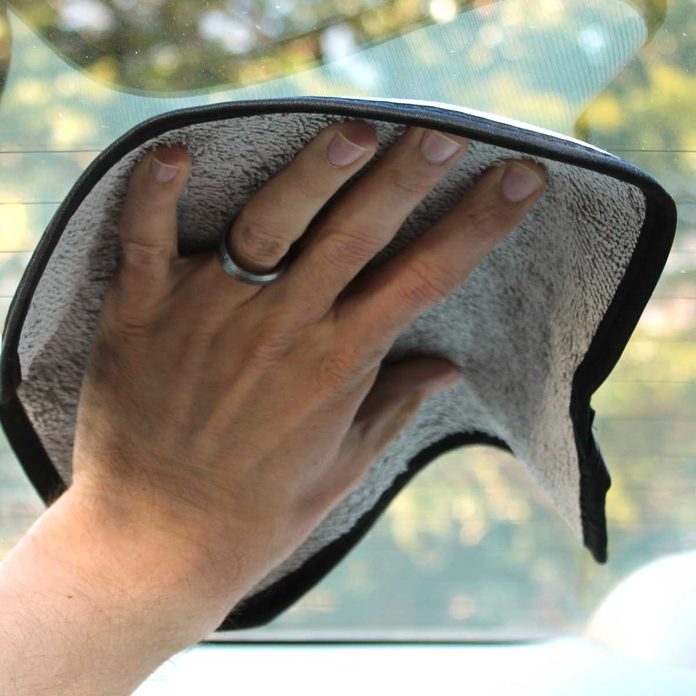
    • Microfiber rags that are lint-free
    • Glass cleaner
    • Vinegar
    • Drinking alcohol

    Cleaning Tips:

    • In a spray bottle, mix the solution. The following are popular and highly effective options:
      • 50% alcohol, half water, and a cupful of white wine.
      • 70% water, 15% cleaner for windows, 15% alcohol.
      • *Use an auto specific glass cleaner. Avoid ammonia-based cleaners, which can damage vinyl, leather, or tint.
    • To make it easier to access windshield glass, gather all your materials.
    • Wipe the glass with a microfiber towel that is dry and clean.
    • Next, use a new cloth and rubbing vodka to clean the glass. If you live close enough to the ocean, vinegar can be used to dissolve sea salt.
    • Spray glass cleaner on a separate side of the rag or grab a clean rag and rub the glass in circular motions.
    • As soon as towels get dirty, change them immediately.
    • Finish the glass by using up-and down wiping motions.

    Tips for Success:

    • Your car’s windshield should be cleaned last after you have washed the exterior of your vehicle and wiped down its interior.
    • To prevent window cleaner from vaporizing quickly, it’s best to wipe down windows in the shade and when the temperature is cooler.
    • You shouldn’t use rags that you used for cleaning other parts of your windshield. Your windshield could become greasy and oily from wax or other detailing products.

    Ensure Your Sparkling Windows Last

    Make sure your windshield is clean. This simply keeps your car’s temperature down and allows gasses to escape. Your garage or home should be a shaded place where your car can stay cool. To prevent off-gassing, and buildups of contaminants, crack your car windows.

    How to clean rubber around car windows

    It is easy to overlook rubber trim around your car windows. Because it does not easily fall under the categories of car body and window cleaning, it can be easy for people to overlook. You need to make sure your rubber trim is in top condition so that they don’t get any moisture or contaminants into your windows.

    It’s possible to clean them in just a few simple steps.

    1. Use car shampoo on the entire trim.
    2. Clean and remove all dirt using a microfiber cloth or sponge. A soft toothbrush is recommended for particularly filthy or marked trim.
    3. Wipe the shampoo off with a damp, clean microfibre towel.
    4. Dry your skin with a microfibre towel

    You can protect your rubber after it has dried completely.